Benefits to the body and the environment
Among the benefits counted in the centuries-old art of foraging, one must first mention the care for the environment: it is by foraging for food in nature that a process of rediscovery of the biodiversity in which we live is initiated. A practice to be preferred, however, only if supported by the proper technical skills: distinguishing, selecting and cataloging elements that will form the basis of our food are in fact steps that require knowledge and familiarity. Thoughtfulness is directed not only to the health of those who feed on the aforementioned plants but also to the ecosystem, which, when overstressed or damaged, risks having its very balance altered.
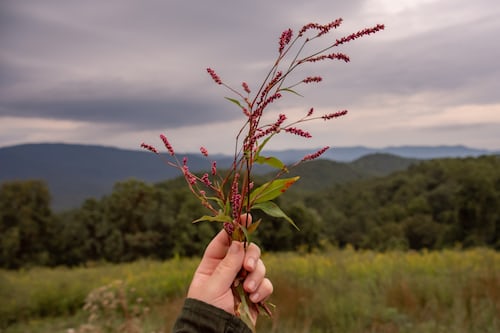
Consider the hypothetical intensive specifical harvesting of a plant: if the exercise persists and, more importantly, if it is not accompanied by a technique that stimulates the revegetation of the plant, it will promote its extinction.
Shifting the focus to the health of our body, we can trace as many benefits: immersion in the forest is in itself a first stimulus to rebalance stress levels, thanks to the immersive experience in close contact with nature. Not to mention the various nutrients found in natural foods, useful, for example, in fighting inflammation, regulating cholesterol levels, strengthening the cardiovascular system and improving diuresis.
Use of trees and flowers in the culinary field: from the home environment to awarded cuisine
Foraging is finding increasing use in the culinary sector, for valid nutritional, environmental and technical innovation reasons, with involvement ranging from the more modest, home-style cuisine to the award-winning.
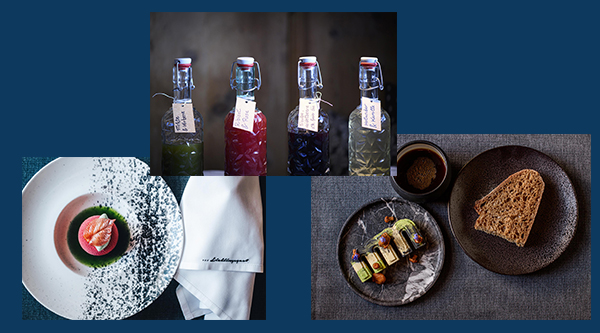
Dishes served at Michael Ploner’s S’kammerli
In the former case, it is the simple dishes, with few ingredients, that take center stage; the range of products includes wild herbs such as chicory and arugula (present in both winter and summer), nettle (perfect for risottos and omelets) and yellow gentian (to be used in the preparation of liqueurs). And berries (blackberries, plums, blackcurrants, medlars, chestnuts, wild strawberries) have always been undisputed on our tables, to be enjoyed naturally or in the form of preserves. The latter in particular require meticulous selection, because they are easy to confuse with other similar but harmful banks for humans.
In this regard, it is indeed preferable to approach the world of foraging through constant practice and the study of manuals. Substantial innovation in the gastronomic world occurs, however, through the work of star chefs who have skillfully incorporated such ingredients into refined dishes. This is the case of Michael Ploner, from Tirol, who, after learning the art of foraging in Scandinavia and experimenting with its use in the kitchen at Noma in Copenhagen, has treasured it and repurposed it in his homeland in a sensational combination with local dishes.

Natural spirits produced and sold by SelvatiQ
Artistic flair and proverbial preparation in the field of herb harvesting has also earned a Michelin star in the town of Sorisole, in the Bergamo area, thanks to the mastery of the Manzoni brothers; indeed, at their restaurant, Osteria degli Assonica, one can enjoy dishes that count 50 to 80 varieties of plants grown by themselves, as well as those found in neighboring fields and forests.
Foraging: innovation in the production of alcoholic beverages
Wild Nomadic Spirits. Three simple consequential words to describe the rebellious and natural spirit with which SelvatiQ has given a new face to alcoholic beverages by harnessing foraging. Born from the will of Charles Lanthier and Valeria Margherita Mosca, this project aims to make and spread renowned drinks such as vermouth, bitters, and gin starting precisely from herbs found locally.
With a focus on content and container (the packaging boasts trimmed glass and cork), the gastronomic novelty lies precisely in repurposing the usual spirits but with an added twist as they are enhanced by the presence of plants selectively matched to the drink such as Milla flowers in the gin and Scotch pine buds in the vermouth.

Graduated in Journalism, Editorial Culture and Multimedia Communication from the University of Parma, she loves interfacing with new realities. An aspiring traveller, she has a keen eye for ecology and human rights. In Atmosphera Lab she has found a valuable ally to communicate what is closest to her heart.
More articles