- Hi Enzo! Can you explain to us in a few words what Archeoplastica consists of?
Archeoplastica is a project that wants to convey a message of marine environmental protection, especially since it is a project very much related to the sea. Synthetically, it can be summarized as an environmental education project.
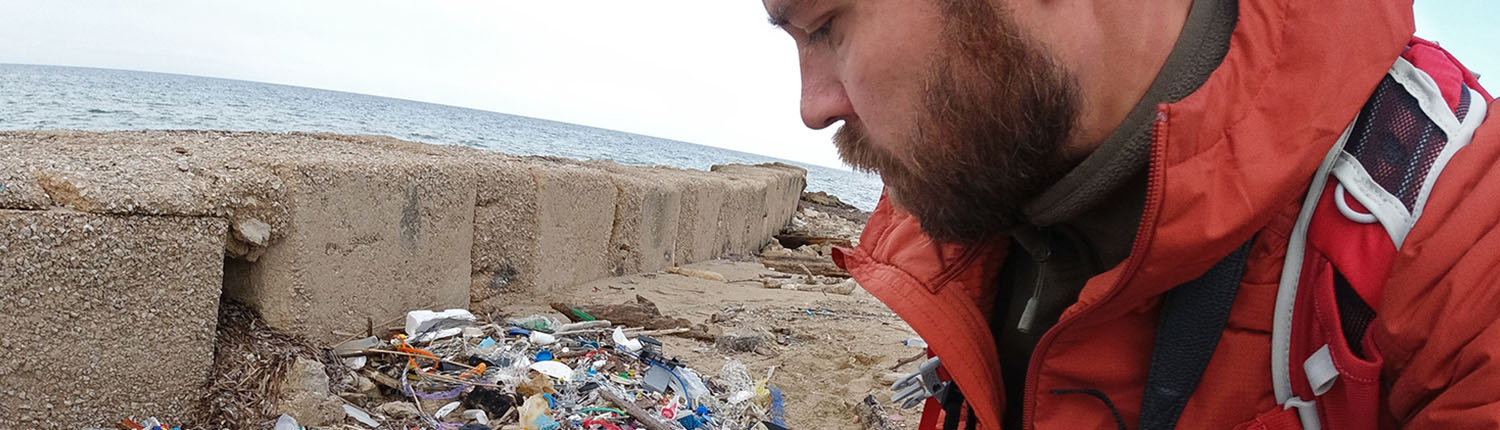
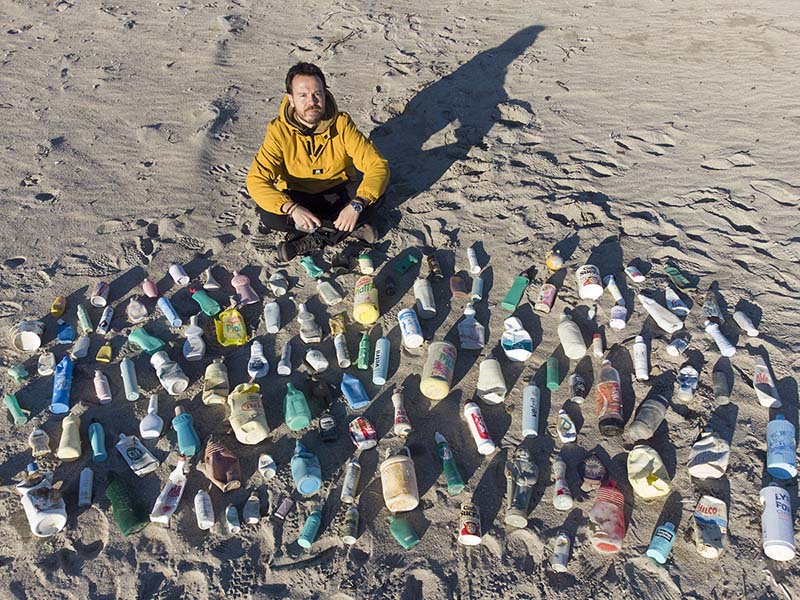
Among the main goals, there is to raise people’s awareness in becoming more aware in our daily use of plastic, especially disposable plastic. When I find a plastic object, I reconstruct its history, treating it as if it were an archaeological find. But it is waste, which is very often even more than 50 years old and still intact. One is surprised that it lasts for fifty years, but that material could last for centuries. Seeing with one’s own eyes that a plastic container, for example a yogurt pot, that is found still intact on the beach, after having come from the sea, a place precisely where it obviously should not be, has a different effect,especially because one realizes that that object that has lasted so many decades has had a very short time of use. The vast majority of the waste that we find at the beach, when it comes to plastic, are detergents, household cleaners, cosmetic containers, shampoos, bubble baths, and everything related to the food industry. They are containers of various kinds, whose function is to contain the product that we consume within either just a few minutes – that’s really the most extreme case – or maybe over a few days, or a few weeks. We are left with a container that immediately becomes waste that, if mishandled, is found after so many years on the beach still intact.
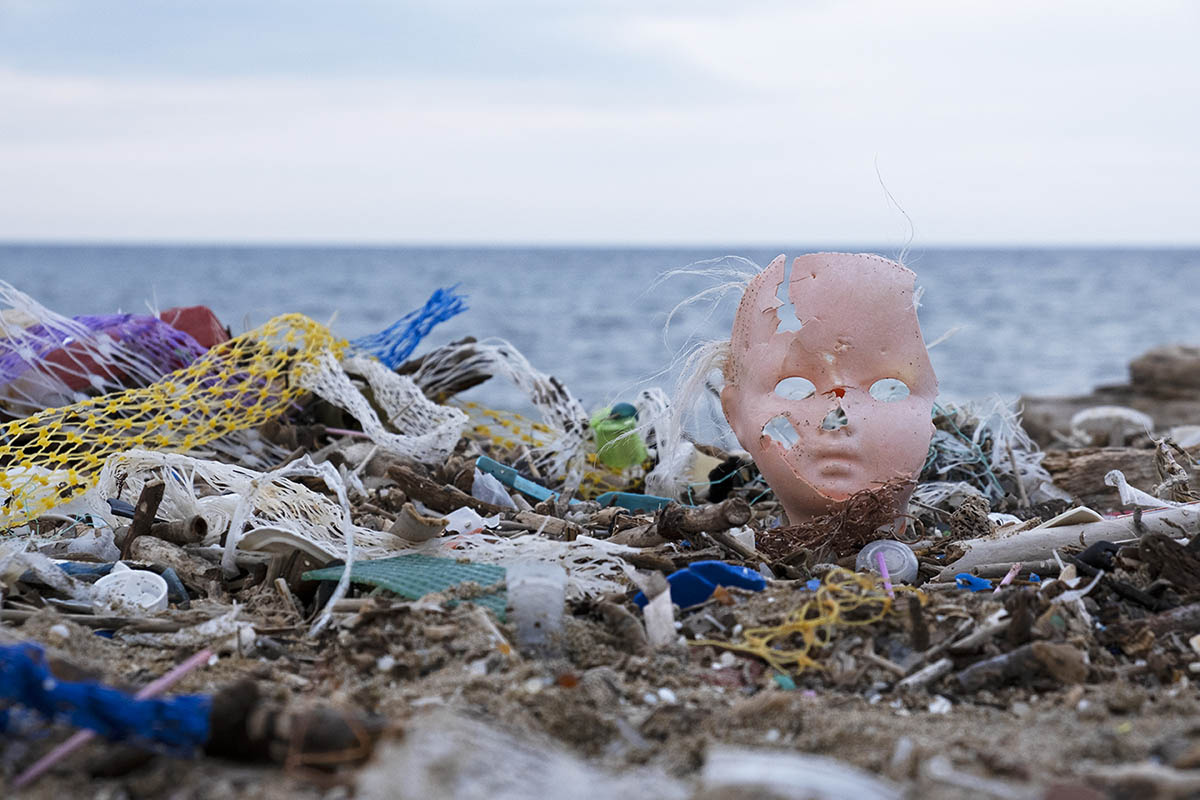
So this is the real problem with disposability: our misuse of this material. Even without commenting, Archeoplastica serves to stimulate this awareness, simply by showing waste from decades ago. Without pointing fingers of responsibility, without making people feel guilty: it is a reflection that comes naturally from seeing a container that after so many years is still intact, when in fact it has been used for very little time. This is the first impression I also had with the first find, which then pushed me to structure this idea better, until after a few years the project was born. It was made official in February 2021, however, the idea was born a few years earlier, at the end of 2018, when I started to discover that there are really a lot of these finds on the beach. So after setting aside quite a few objects, I structured my idea better and from there the project as we know it today was born. Archeoplastica is first and foremost based on showing this waste, in as many ways as possible. Not only on social media, but also physically, with the exhibitions we organize, where you can see with your own eyes or even touch the artifacts. Or show them with the virtual museum, which is the Archeoplastica website. That site came up early on with the project and contains a selection of the material we collected. There was a lot of work behind photogrammetry. Many of the artifacts in the online museum can also be seen in 3D, with all the details.
- So exactly how did the project come about?
I got the idea from an initial piece of trash found on the beach, somewhat randomly but not entirely. In fact I had been collecting trash on the beach for several years. It wasn’t until I dropped my eye on that “nine hundred lira,” that I started looking carefully at all the trash, looking at everything on it, such as where it came from and what it cost. From there, my approach to collecting items also changed. And I learned so many things. Now, already with a quick glance, I can guess the approximate date of an object. To give you an example, in the last 20 years, containers have a sticker label that is very often lost after a very short time that the waste is in the water. There is glue, the film comes off, which will then cause other damage independently of the container. Instead, in the past, the graphic was printed directly on the bottle. So already that gives an indication of how dated an artifact may be, always going back a little bit further. In finds dating back to the 1960s, we even find the markings on the back of the bottle in relief: these are little features that allow us to date the waste.
If at one time that object collected on the beach then would have gone straight into the bag, today with the increased awareness in collecting waste, when I see such an object I understand that it can be interesting, I put it aside because I know it can be useful for the project. Sometimes it happens that I don’t understand what a bottle contained, because there are missing directions or because maybe it is so old that there are no period advertisements, there are no traces on the web. Often the Archeoplastica community gives great help in reconstructing history. Among the people who follow Archeoplastica there are many enthusiasts: there is someone who may be a little older and may have a memory of that object. Other times it has nothing to do with age: maybe even a hunch is enough that can put us on the right track to be able to start the research. It has happened many times, of particular bottles whose function we could not understand and whose history we were able to reconstruct thanks to the people who follow us.
- What expectations did you have when you started the project? Have they been realized or have they precisely changed even over time?
To tell the truth, I didn’t have any particular expectations: I was really convinced of what I was doing, I knew that the project would be well received. I have been involved in environmental education since 2010 and I am also a naturalist guide.
Before the project was born, I had the opportunity to experiment by bringing these objects to school: there was a lot of interest and I understood that the project would be valid. Perhaps the most unexpected aspect is the social aspect, because it developed afterwards and was a new part for me. Just think that even the Instagram profile was opened three months after the project was launched. Initially I did not think about it, the priority was not the social one right away, which was born little by little. The project was born from the bottom up, with crowdfunding in which really a lot of people participated, who had already dealt with me or met me on the ground. Then from there it was also a crescendo of attention from various media.
- Approximately how much time do you spend researching the information about the object?
There are objects that took more than a year to research. For example, there is the character of the Hunchback, which did not have any kind of inscription, and that made everything more complicated. The hunchback is a Neapolitan symbol, a good luck figure. It took us a long time to figure it out. It was only months later that some clues popped up. First from a collector, who had an identical specimen, but in a different color, and had dated it to the 1960s. Then, after a TG1 report that was widely seen, a girl from the north recognized the same item and told me that she had one just like it, which had been won at a local fair by her grandparents. We are still talking about the 1960s, so it was really very dated.
https://www.instagram.com/reel/CjuraW5pYUK/?igsh=cHJ5a3d1ZjQxYzNx
Then there are simpler items, such as containers of famous brands, for which searches are much faster. It still takes hours because we research the brand and look to see if there are any vintage advertisements on the net. Fortunately in Italy there is a big market among collectors of old vintage advertisements, often they are few excerpts but they give us a hand in dating the objects and seeing what they were like when they were on the market; it is interesting to see how that product has degraded over time, what colors have faded, for example. If an item is in the sun for a long time, some colors tend to fade sooner than others. Sometimes the brands themselves are involved in the research, without any kind of publicity. We approach it very quietly, and sometimes brands have cooperated in identifying and dating a product; they have even provided us with pictures of what that object once looked like. Without any sponsorship, we tell the story very objectively and with documentary intent. A smart brand should understand that our goal is to raise awareness.
- What beaches do you usually frequent? In Italy or also abroad?
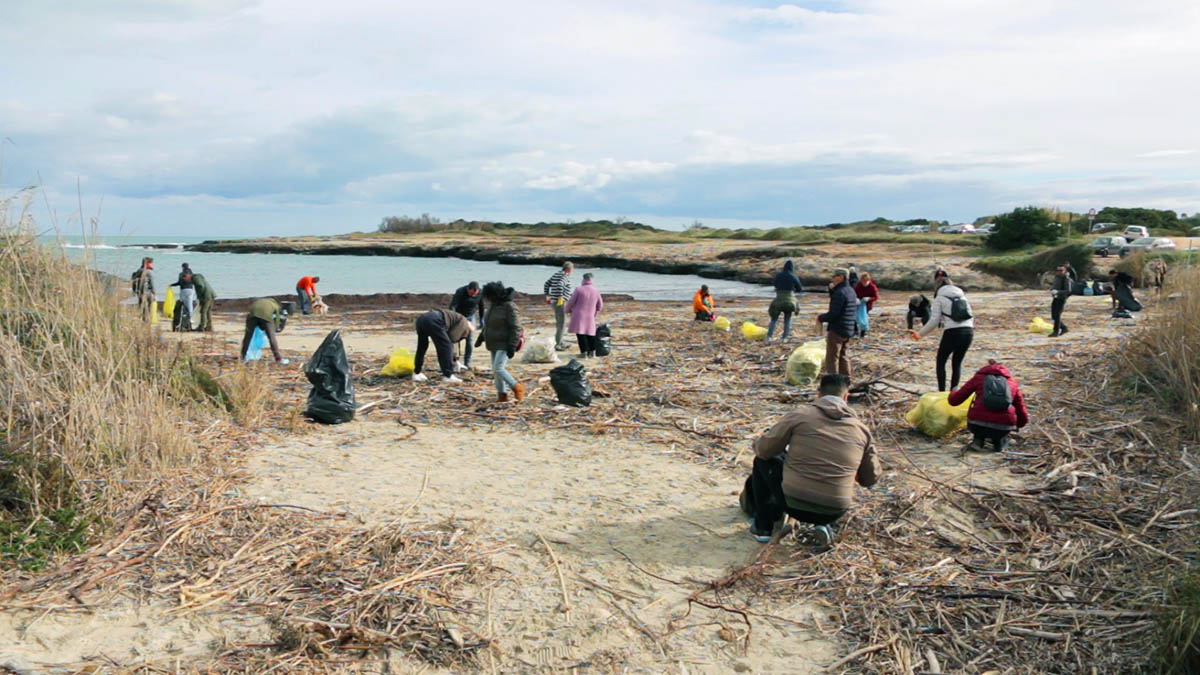
I really like this question. It is a project born in Puglia, both because I am from there, but also because Puglia is particularly prone to beaching. It is a matter of currents: the mistral is a wind that pushes from the north, so waste from the northern Adriatic, in the Balkan area and the Po delta, is transported south, so Puglia collects so much material. This happens especially during winter periods, when municipalities no longer clean because the establishments are closed, so the material tends to accumulate. In winter, the beaches are very dirty. Few people see them in this state because most tourists come in the summer, when the beaches are cleaned daily by operators before people arrive. So I started collecting mostly in the winter and spring. Then clearly when the project developed better, a network of collectors was created.
Also, I found that every year is different. In Tuscany, for example, last year there was a lot of harvesting. There were a lot of swells with winds from the Tyrrhenian side. The swells also put plastic back into circulation that maybe was on the bottom or in the sand, in the dunes that then go into erosion. In principle, it is a phenomenon that affects any place in the world because even the most paradise-like beach is not immune to the plastic problem. Some places, however, are more affected by currents and other factors related, for example, to the presence of rivers that put plastic. Regions such as Puglia are a bit more unfortunate because there are more obvious beaching phenomena. Abroad, on the other hand, I have some non-direct experience, someone sending me pictures. Although I have not gone there yet, I have a desire to explore foreign beaches as well.
- What is the element that gives you the most satisfaction with the Archeoplastica project?
Definitely the fact that a community has been created, on a social level. I feel I can interact with people, share ideas. There has also developed a collaboration in finding the origin of objects together. This is an aspect that I really like. I am also particularly interested in the exhibition part because it allows people to physically recognize the objects: so many people write to me that they are happy to see some artifacts that they had already seen with their eyes on social media and whose stories they already knew. It is not at all easy to organize an exhibition, but it is something that we are developing more and more, also because it allows us to reach so many people, who are amazed to see the bottle of an object that maybe their parents used. Then a slightly more negative feeling takes over, which is the awareness of the fact that that bottle was picked up on the beach, a place where it obviously should not have been. The exhibitions also allow school groups to be reached, the children are interested, they are attracted to these objects from the past, which by the younger ones are seen as being right out of prehistory, even though they are the age of their parents and grandparents.
- Even though you still speak very highly of the community, you still work on socials. Have you ever received any negative comments as well, and if so, how did you react?
I received some in the beginning. Especially on Facebook, there were some who said they were fakes. They bothered me a little bit, more because it’s an offense that disrespects great work, so I used to respond. But then, once Archeoplastica was born, so many other people started doing what I do, which is to take a good look at what you find on the beach. They were collecting in many other parts of Italy and they found that actually on the beach among the trash there is a lot of unsuspected material, which at first glance looks like modern material, however it is not. And so, very often these pickers would respond to comments saying it was a fake, pointing out that they too had found bottles from many decades ago. Then there are some rude people who comment with vulgar language, but they are immediately banned because, especially on Instagram, the account is followed a lot by families and therefore also by children who watch the videos together with their parents. That is why for me it is necessary to keep the page always quite clean of possible swear words.
- What is the strangest object you have ever found at the beach?
We found many strange things. To tell you, a denture. We have found all kinds of things, even bulky things, like a toilet flush box. Or often even the toilet seat cover for example. How did it end up in the sea? Boh. Of oddities, we really saw a lot!
To learn more about plastic recycling, read the interview with Venice Calls, a Venetian association that organizes workshops to educate people about plastic recycling.
If, on the other hand, you are interested in learning more about beach archaeology, don’t miss this article!

Literature graduated (UniMi), she is currently studying Environmental Humanities (UniVe). Hungry for stories, she loves writing about the environment and being provoked by people’s ideas. Determined and thorough, she likes to go beyond the apparent superficiality of facts. Her safe place is the library, but don’t be fooled: she is never punctual in returning books.
Altri articoli