Multispecies ethnography of water
Following the project of Kirksey and Kohn on the “anthropology of life” that is, “an anthropology that is not just confined to the human but is concerned with the effects of our entanglements with other kinds of living selves” (2010), I attempt to zoom in on the relations between water and humans and attentively look at the florid realm of species that are entangled with and have an influence on this relationship.
In this section, I used Pratt’s concept of “contact zone” to explore the “asymmetry of more-than-human contact zones within environmental knowledge production and management” (Isaacs et al., 2019). Since a multispecies ethnography is centred on the ways different organisms “shape and are shaped by political, economic, and cultural forces,” I struggle to confute “human exceptionalism” (Haraway, as in Isaacs et al., 2019) and focused on the contact zones “where lines separating nature from culture have broken down” and where the frictions between humans and water are coproduced by a variety of species, including microbes, bacteria, insects, and even abiotic factors. As explained by Kirksey, “ethnographers are turning to microbes as social agents, on land, in the sea, and in food” to take into account how humans relate with prokaryotic organisms as well as how to represent and give meaning to them within these relationships.
Water is not just hydrogen and oxygen, but contains a flora of organic and inorganic materials that condition its quality, safety, and organoleptic features. Among these substances, some interact with other living organisms that exist within water and humans. For example, chlorine is routinely used by public agencies to disinfect drinking water, as it can eliminate bacteria such as enterococci and Escherichia coli and spores and viruses such as Legionella. The concentration of chlorine in water must, however, be controlled so as not to have damaging impacts on humans.
High concentrations of chlorine may have adverse effects on human health affecting the bacterial flora present in our guts, or interact with the organic matter of water and form potentially carcinogenic compounds known as trihalomethane. Chlorine remarkably unsettles the ontological assumptions of the division between culture and nature.
Thinking of chlorine’s action within the humans-water relation is a way to overcome the boundaries of species as chlorine reacts with organisms present in water and organisms inside the human body, challenging our firm distinction between humans and non-humans.
Other elements that provide a contact zone where the edges of humans and non-humans vanish are nitrates. These are compounds present in the water by effects of multispecies activities: nitrogen-fixing bacteria and artificial fertiliser. Nitrogen-fixing bacteria are microorganisms capable of transforming atmospheric nitrogen into fixed nitrogen, which the plants can use for growing.
There are mainly two types of nitrogen-fixing bacteria: non-symbiotic and symbiotic. Among the first kind, there are cyanobacteria or “blue-green algae” that are both photosynthetic and nitrogen-fixing organisms. Among cyanobacteria, the filamentous species have specialised, thick-walled cells called heterocysts that provide the anaerobic conditions necessary for the operation of the nitrogen-fixing enzymes.
The second kind of nitrogen-fixing bacteria enter in an intimate association with plant roots converting free nitrogen to ammonia. Billions of years after prokaryotes like cyanobacteria solved the issue of nitrogen fixation, two German scientists, led by Fritz Haber and Carl Bosch, figured out how to draw nitrogen from the air to make artificial fertilisers. “The Haber-Bosch process revolutionised agriculture” (Christian, 2018). The nitrogen produced by agricultural and bacterial activities runs off into water streams and so the concentration of nitrates in water is co-produced by two different species. In potable water, nitrates concentration is strongly regulated as it can have adverse effects on human health.
Once ingested, nitrates can be converted into nitrites that can reach the gut and interact with N-nitroso compounds that can be cancerogenic at high concentrations. I believe that considering the multispecies co-fabrication of water’s components and the exchanges among different organisms may offer an attentive examination of the scale of water that also includes “situated connectivities that bind us into multi-species communities.” (D.B. Rose, as in Kirskey, p. 549) Within this perspective, as Dumit suggests, we can attend where researchers and ordinary people “get stuck” due to their inadequate concepts and invent new ones that allow us to talk and think in different, more suitable ways.
A farmer and a cyanobacteria are “creatures with simultaneously parallel and entangled biographies.” They both have the same goal: to make available nutrients to plants for their own survival. This detached, parallel relation between humans and bacteria may represent one way of “living with” the other creatures of the biosphere, as suggested by Donna Haraway’s 2008 When Species Meet.
My ethnography of water struggles to deal with “the problems of representation,” that is, the problem of giving a voice to cyanobacteria in “questions of relatedness, exchange, governmentality, and signification.” How shall we duly consider these bacteria when we think about our relations with water? The mission of anthropology is to give a voice to “the others,” both non-white and non-humans. Toiling to envision the tiniest scale of water relations, I realised that humans are entangled with other species and elements, and thus it is very difficult to discern the edges of the human’s dimension and corporeality. This case study offers an opportunity to confute human exceptionalism – “the foolish notion that Haraway pushes us to move beyond.”
Water insecurity and water scarcity
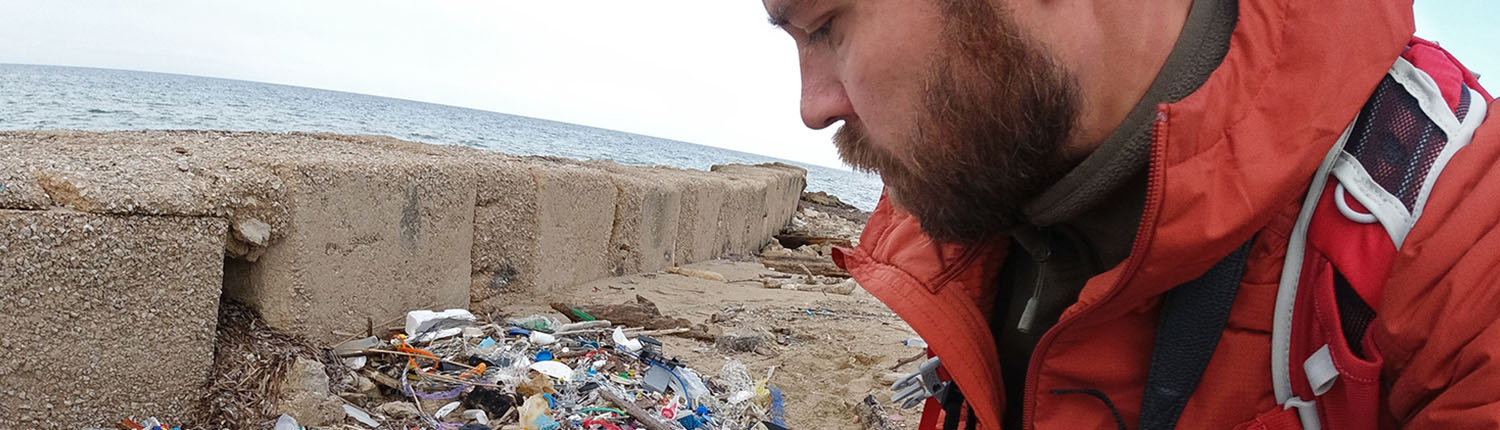
One clear sign revealing the relations between the villagers in Crespi and water are the several PET bottles, HDPE lids, and PVC labels that I found on the ground or hidden in the bushes of the pine grove. In Crespi, as in many Italian urban centres, massive and irrational consumption of bottled water is extremely common. Italy’s bottled water market is the ninth largest in the world, with a per capita consumption level of 222 litres, second only to Mexico.
This enormous consumption is spurred by the logic of the capitalistic economy. According to a study from the Mediobanca research area, these numbers are achievements that Italy and Italians can boast about, neglecting the side effects of plastic pollution and the containerization of a fundamental and scarce natural resource. Pacheco-Vega (2019) in his essay on the politics of bottled water posed an important question about the ethics of the bottled water market: “How is an industry that makes money from packaging a scarce resource compatible with our intentions to create the conditions for a global norm of the human right to water when scarcity is one of the key dimensions of water insecurity”?
In the essay, the author points out several factors that have “contributed to the emergence and sustained growth of the global bottled water industries,” including, governmental failures to provide safe drinking water, inadequate networked water infrastructure, normative failures, multinational corporations’ strong influence on local government, and “a shift in norms where consuming bottled water has become somewhat a cultural norm despite its negative environmental effects.” I engaged in informal interviews with some villagers in Crespi D’Adda and I found that locals are very suspicious of the quality of tap water and prefer consuming bottled water for safety concerns.
However, few villagers know that UniAcque is the corporation in charge of the in-house management of integrated water service and that the website of the company shows a thorough description of the quality of the water delivered and the assurance of potable, safe, controlled, healthy, and fit for human consumption water. UniAcque checks daily the water quality through the analysis of microbiological and chemical parameters. According to the company’s report, water is analysed from the supply source of the aqueducts to the checkpoints located on the delivery networks of all the municipalities.
UniAcque’s website has also a FAQ section in which the company explains that the popular opinion of mineral water being safer than tap water is a false belief. Both water “are not different from the point of view of safety.” However, the several PET bottles I found in the pine forest as well as the distrustful opinion of villagers reveal that water insecurity is a strong concern.
In Italy, water insecurity is particularly acute in cities where infrastructures are compromised due to a lack of maintenance. The Peninsula shows a substantial deficit in the level of water infrastructure investments. According to the national press, 80% of investment comes from water tariffs, which are among the lowest in Europe (1,87 euros per Mm3 against Germany’s 4,98), while the other 20% comes from public contributions. Among EU countries, Italy occupies the second-last position for investment per capita with 40 euros per inhabitant.
Bureaucratic sluggishness, poor coordination among public agencies, fragmentation of the water supply system, and reduced sensitivity to environmental problems have led to the degradation of water utilities. On an overall network of 300 thousand km, as many as 70 thousand km have not been renovated for half a century. In the ISTAT’s Statistic on Water (2023), the front page of the report describes the fragmented management of water services in many areas of Italy. The water system is parcelled out in 2391 managing authorities that administer over 7000 entities that oversee the supply of drinking water and the management of the municipal water network and the municipal drainage system. The report shows that due to the obsolete infrastructure, 47.9% of the water pumped in the network vanished, unconsumed, wasted, willingly sacrificed by the ineptitude of the local authorities that constantly fail to address the issue.
The alarming management of water resources and water utilities in Italy allows us to deepen our understanding of the concept of water scarcity. This is not just a natural phenomenon related to the spatial and temporal (seasonal) natural lack of water, but it also has a social dimension. Water scarcity also includes the social trade-offs that a country must take in the technological and normative change to adapt to the natural dearth of water. Ohlsson (2000) claims that when resource supply reaches a tipping point, the increase in demand can only be sustained by the improvement of the end-use water efficiency through technological innovation. “The introduction of social aspects in the analysis shifts water scarcity from an absolute (though scarcity weighted) to a relative concept, in the sense that water management is subject to trade-offs among different social uses.”
In economic studies, to acknowledge the natural and social scarcity of water, some authors have proposed the Social-Scarce Water Footprint (SoSWF) concept. This index deepens the understanding of what water scarcity is: a natural phenomenon linked to regional temporal and spatial changes affecting global conditions, that lead to social trade-offs. Due to these compounding problems, besides being the second largest consumer of bottled water in the world, Italy ranks first in Europe for the civil use of water, with 428 litres supplied per person per day, but only 220 litres actually consumed.
Purchasing bottled mineral water can be understood as an act of protection of human health against the bad state and poor management of the water infrastructure. Government officials “leave it to consumers to solve their problems of water insecurity.” These include emotional distress and physical affectations with potential compounding and multiplicative effects that are augmented by the grim prospect of rising temperatures and land aridification.
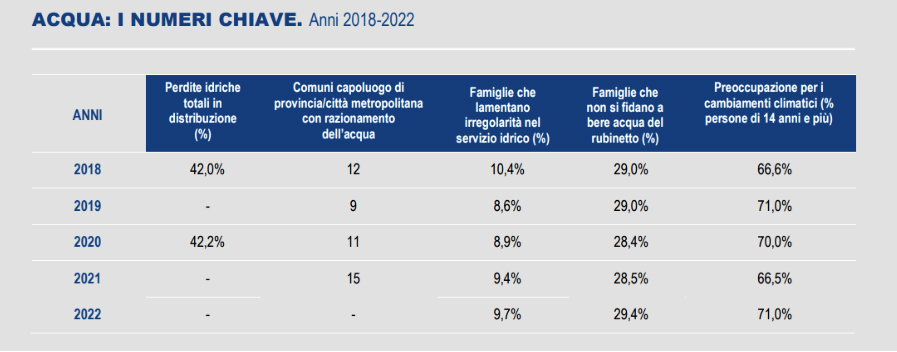
Courtesy of: ISTAT (2022)
The relevant relation between humans and water
Walking around Crespi’s pine grove, I pondered about the linkages that matter and are central to the issue of water insecurity and scarcity. I attempt to zoom out and look at the larger “contact zone” that links human consumption habits and water scarcity.
I asked myself which is the relevant level upon which we get into contact with water. Which relations shall I look at? After studying Liboiron’s Pollution is Colonialism (2021), I realised that to comprehensively conceptualise water relations, I should look at the scale where our individual relationships with water are subjugated by the collective and industrial linkages with the liquid substance.
To explore this notion, I use Liboiron’s concept of “scalar mismatch,” which refers to the practice based on “the possibility of separating human (body) and (polluted) Nature.” In her insightful analysis of plastics pollution, Liboiron points out that due to the industrial production rate of plastics, reducing its ubiquity and pollution goes beyond the individual endeavour of decreasing consumption by, for example, not buying plastic bottles.
This is because focusing on individual consumption misses the relevant (real) relations between plastics and humans: “Even if you swap out your plastic bottle for a glass one you still have BPA coming in from cash register receipts, paper bills, the lining of canned food, and epoxies” (Liboiron, 2023, p. 101). The author explains that plastic is not a discrete entity, an object that an individual may define and separate from the rest (of Nature) simply by not consuming it.
In a complete similarity, water is not scaled by relations of discreteness and separation. Its quality and quantity do not depend on individual consumption. Water scarcity cannot be alleviated by merely shortening our showers or buying fewer bottled beverages. Failing to conceptualise water scarcity can result in paradoxical situations.
Through interviews with Crespi villagers, I found that locals are aware of the waste caused by long showers, but they neglect the water (over-)used to produce the high-calorie, meat-based junk food sold in fast food restaurants. Shortening shower time from ten to three minutes can save up to 70 litres; however, the production of one hamburger requires 2400 litres of water.
The first type of water consumption is referred to as the domestic water footprint (consumption within national boundaries); the second kind is the consumption based on the concept of virtual water, that is, the water contained in the products exchanged among countries, which is part of the external water footprint. The sum of the two indexes gives us the total Water Footprint (WF) that defines the total volume of freshwater used to produce goods and services consumed by the population of a country (Hoekstra and Hung, 2002).
Following Dumit’s analysis of bromine, I am interested in exploring the unknown edges of water that may challenge “the words and worlds we can use to talk about what it modifies and relates to” so that it can mess “with parts of our theoretical vocabulary, our assumptions of reality and malleability and relationality” (2021, p. 102). Conceptualising water in these terms allows us to see “one crucial relationship” in water usage: international trade.
It has been argued by economists that one instrument that may actually save water is the virtual water trade system, where virtual water is traded from a nation with relatively high water productivity to a nation where water productivity is relatively low. For example, a country affected by water scarcity that imports a ton of wheat (equalling 1.3 tons of water) is relieved from having to harness its own water resources to produce the raw cereal.
The virtual water trade system can imply real water savings because this is the relevant scale/relation of water. That is, water is entangled in global practices and processes that frame the modern capitalistic economy, therefore understanding the “ontological shift” of water requires seeing the structure, the system, the architecture that allows water to be consumed (and wasted) at today’s rate. In a research from the University of Florence, Sturla et al. (2023) adopted the Multiregional Input-Output Analysis (MRIO) approach to measure from which countries Italy imports (and so consumes) water. Their results show that Italy’s external WF corresponds to 81,491 million cubic metres (59.7% of the total WF). For agriculture and manufacturing, external WF is much higher than domestic WF (almost double for agriculture, six times higher for manufacturing). Considering the country of origin of virtual water, they found out that China, Brazil, and the US are the three countries with the highest share of external volumetric WF representing 19.4% of the total.
How do we consume water?
Shifting our understanding of water from the substance composed of tiny organisms and consumed in our home to the substance embedded within most of the commodities and services means rejecting the common practice of “consumer avoidance“. This practice conceptualises water as a physical substance that relates to us only through “actual” consumption. Consumer avoidance looks at “how much” water is consumed. I argue instead of focusing on what Liboiron defines as violence (as opposed to harm), that is “how and why” water is used.
The latter is the “relational question that matters at a different scale” (Liboiron, 2021, p.85). For example, according to the Food Agriculture Association (FAO), global freshwater usage has increased by a factor of six over the past 100 years and irrigated food production will increase by more than 50% by 2050. If water usage and waste is a practice ubiquitously present, we should not look at the “end of the pipe,” that is, the consumption at the level of the household, but at how water goes “into the pipe to begin with,” that is, the usage occurring at the industrial level.
Figure 1 shows which level of relations matter with the water substance. In 2020, the spread of COVID-19 around the globe imposed drastic limitations on international trade with both demand and supply deeply decreasing similar to only the Global Financial Crisis of 2008. An OECD’s (2022) report describes this pause as “V-shaped,” as trade recovered quickly in the second half of 2020. However, the few months of steep declines were enough to lower the total WF of many European countries, including Italy.
In a study that investigates the sensitivity of the electricity-water nexus in the European electric grid to large-scale behaviour changes during the COVID-19 pandemic, Roidt et al. (2022) found that virtual water transfers associated with electricity demand and generation were affected. Italy, as a hotspot of COVID-19, “reduced its water footprint by 8.4% and its virtual water imports by 70.700 cubic metres per day.”
The reduction of Italy’s WF demonstrates that in order to conceptualise water as well as the issues of its scarcity and waste, we need to look at these relations. As in the case of plastics pollution, the beginning of the pipe that delivers water and water-made products is the industry. However, differently for plastics, we need to separate national and foreign industry water uses. The former is part of the domestic WF and the latter of the external WF. That is why we need to focus on trade. Domestic WF can be compensated for or worsened by virtual water trade (the external WF). The example of WF reduction during the COVID-19 pandemic prompts us to change the question from “how much” to “how” water is consumed.
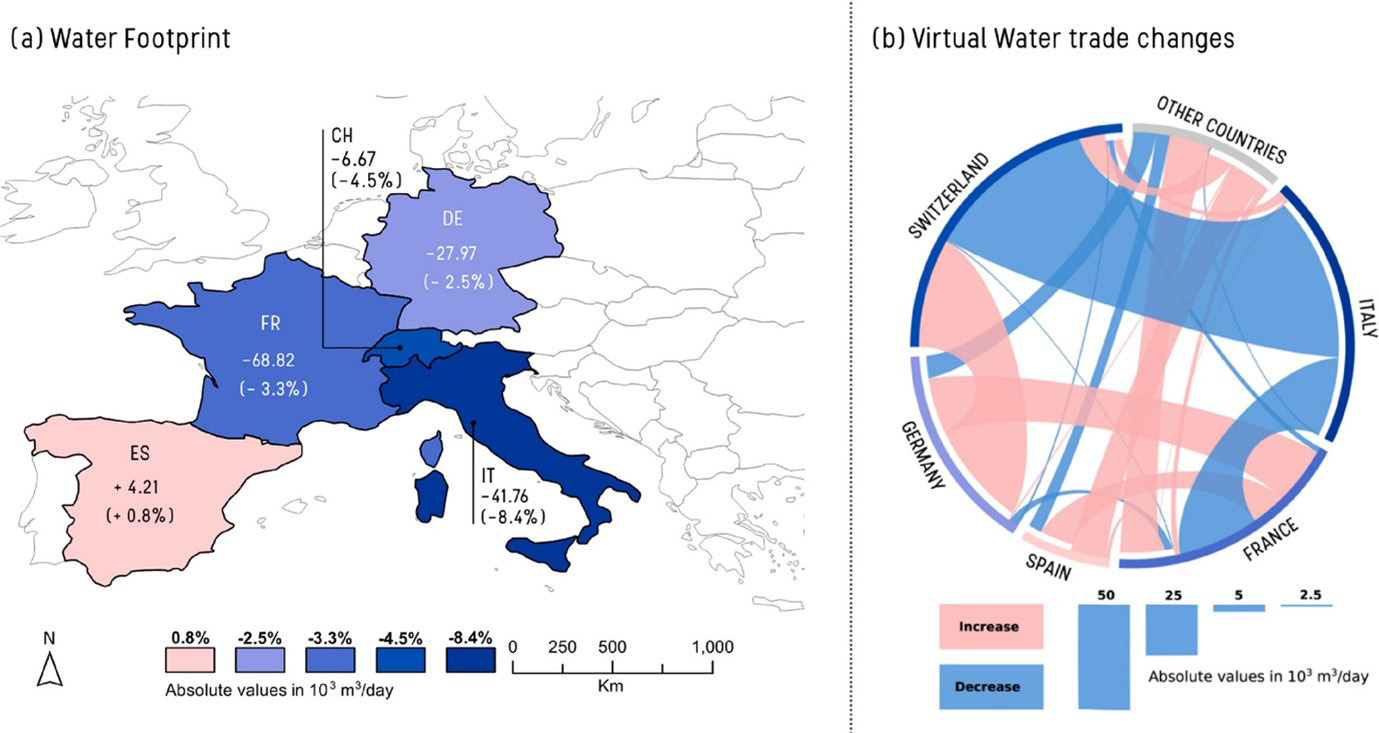
Figure 1(a) Changes in the consumptive water footprint of thermal power plant operations, in 1000 m3/day and approximate percentage values, across five countries in Europe. Colour is proportional to the change in water footprint with respect to the 2016–2019 baseline; (b) chord diagram with virtual water transfers. Exports from a country are connected to the edge of the plot, while imports have a gap. Consistent with the map on the left, blue shading shows a reduction in virtual water trade and red shading represents an increase. Source: https://doi.org/10.1021/acs.estlett.0c00381.
In A Third University is Possible, la peperson (2017) argues that colonialism can be considered as a set of technologies that are exchanged and generate patterns of social relations to land. Technologies change and so do these relationships. “How?” is a question you ask if you are concerned with the mechanisms, not just the motives, of colonialism.”
I argue that the consumption, exchanges, and waste of water are part and parcel of this question. High consumption rates in Italy increase the pressure on natural resource scarcity of other countries, such as China and Brazil, and the countries with whom these exchange goods and services. This rate of consumption is based on the imposition of the neoliberal economy and Western products, ideologies, and logic, which la peperson defines as “technologies of whiteness.”
These technologies can be analysed also where there is no apparent white coloniser or phenotypically black person, or apparently where “everyone is indigenous” to a country. Western people perceive the land as a pool of resources to be exploited in a controlled and planned way. To fully envision and understand the issue of water scarcity, we need to refer to the system that allows such resource dispossession mechanisms to take place.
Conclusion
In this essay, I applied Pratt’s concept of “contact zones” and the approach proposed by Dumit of using a substance as a research method. In this way, I was able to perform an analysis of the human-water relationship that considered the microscopic perspective and non-human agency. I have shown that different species are entangled in this relationship and I have tried to represent and give meaning to them.
The fieldwork in Crespi made me aware of the importance of carefully attending to the non-human’s presence and how ethnographic research is able to contextualise results produced by other means, as in the case of bottled water consumption, thereby increasing their plausibility. Through the economic indicator of the Social-Scarce Water Footprint, I analysed water scarcity as a social rather than natural issue. Poor and old infrastructures cause the loss of nearly 50% of the water pumped through the Italian water network. To solve the water crisis and curb water waste, effective politics should address these social issues that belong to the government’s responsibilities.
Moreover, my results show that water scarcity is not just a natural and social phenomenon, but it entails an ethical dimension based on the Western managerial relationship with nature. The water crisis is a global yet locally defined multidimensional issue whose relevant scale is international trade. The complexity and complicity of water politics reduce our awareness of the problem. Our economic system prompts us to increase consumption for the benefit of the nations and at the same time to curb waste for the benefit of the planet, separating social and natural dimensions.
Western society is stuck in this double bind originating from the neoliberal and capitalistic culture and the managerial view of nature that erases alternative perspectives. I argue that, to fully envision the issues revolving around water, we need to challenge our view of the world and pay attention to humans and more-than-humans coexistence as well as consider the wide range of relations that connect humans with the environment and the way humans are now able to significantly alter these relations.
Reference
Area Studi Mediobanca (2019). BOTTLED WATER IN THE WORLD AND IN ITALY. Area Studi Mediobanca.
Bini, F. (2019, November 9). Acqua, italiani spreconi al rubinetto. Ma è record per il consumo di minerale. La Repubblica.
Cutshaw, L., et al. (2023). Life Cycle Analysis of Thermoelectric Power Generation in the United States. Science Direct. https://doi.org/10.1016/B978-0-323-90386-8.00066-8.
David, C. (2018). Origin Story. A Big History of Everything. Allen Lane.
Dell’Olio, L. (2018, October 15). Non hanno fogne e depuratori la black list dei Comuni è lunga. La Repubblica.
Dumit, J. (2021). Substance as Method: Bromine, for example. Reactivating Elements. https://doi.org/10.1515/9781478021674-006.
Food and Agriculture Organization of the United Nations (FAO) (2016). Water for Sustainable Food and Agriculture. FAO.
Gosh, A. (2016). The Great Derangement. Climate Change and the Unthinkable. Chicago: The University of Chicago Press.
Hansen, R. D., et al (1983). WATER AND WASTEWATER SYSTEMS IN IMPERIAL ROME. JAWRA. https://doi.org/10.1111/j.1752-1688.1983.tb05324.x
Hoekstra, A., et al. (2002). Virtual Water trade: A quantification of virtual water flows between nations in relation to crop trade. Value of Water Research Report Series. Institute for Water Education, Delft.
Ingold, T. (2000). The Perception of the Environment: Essay on livelihood, dwelling and skill. Routledge.
Isaacs, J. R., et al. (2019). Guest Introduction: More-than-human contact zone. SAGE. https://doi.org/10.1177/2514848619855369
Jamieson, D. (2017). The Anthropocene: Love it or leave it. In The Routledge Companion to the Environmental Humanities.
Kirksey, E. S., et al. (2010). The Emergence of Multispiecies Ethnography. American Anthropological Association. https://doi.org/http://dx.doi.org/10.1111/j.1548-1360.2010.01069.x
La paperson (2017). A Third University is Possible. University of Minnesota Press.
Liboiron, M. (2021). Pollution is Colonialism. Duke University Press.
Istat (2023). LE STATISTICHE DELL’ISTAT SULL’ACQUA | ANNI 2020-202. Istat.
McEachran, A. D., et al. (2018). Comparison of emerging contaminants in receiving waters downstream of a conventional wastewater treatment plant and a forest-water reuse system. Environmental Science and Pollution Research (2018) 25:12451–12463. https://doi.org/10.1007/s11356-018-1505-5
(n.d.). LEGGE 5 gennaio 1994, n. 36. Gazzetta Ufficiale Della Repubblica Italiana. https://www.gazzettaufficiale.it/eli/id/1994/01/19/094G0049/sg
National Geographic (2022). Solving Italy’s water problem: It’s time to fix the dripping tap. https://www.nationalgeographic.com/science/article/partner-content-solving-the-water-problem-in-italy.
OECD Policy Response to Coronavirus (Covid-19) (2022). International Trade during the Covid-19 Pandemic: Big shifts and uncertainty. OECD.
Pacheco-Vega, R. (2019). (Re)theorizing the Politics of Bottled Water: Water Insecurity in the Context of Weak Regulatory Regimes. MDPI. https://doi.org/10.3390/w11040658
Pope Francis (2015). Laudato Sii. On the care for our common home. Vatican Press.
Roidt, M., et al. (2020). Unlocking the Impacts of COVID-19 Lockdowns: Changes in Thermal Electricity Generation Water Footprint and Virtual Water Trade in Europe. Environmental Science & Technology Letters 2020 7 (9), 683-689. https://doi.org/10.1021/acs.estlett.0c00381
Sturla, G., et al. (2023). Natural and social scarcity in water Footprint: A multiregional input–output analysis for Italy. Ecological Indicators. https://doi.org/10.1016/j.ecolind.2023.109981
Tuck, E., & Yang, K. W. (2012). Decolonization is not a metaphor. Decolonization: Indigeneity, Education & Society Vol. 1, No. 1, 2012, pp. 1-40.

A graduate in Chinese Studies (Unibg and Unimc), he is currently pursuing a degree in Environmental Humanities at Ca’ Foscari University. He is a teacher of Italian in a public school in Beijing. He believes in the importance of environmental justice.
More articles