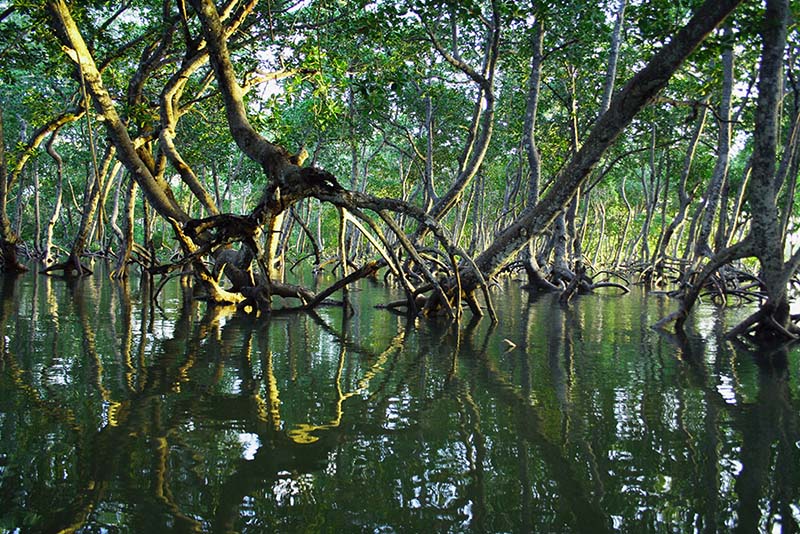
This positioning of ours obliges us to “staying with the trouble“, to use the expression of ecofeminist philosopher Donna Haraway. Just following Haraway’s theories, [12] I would now like to weave the threads of a short multi-species fabulation. According to the philosopher, we should stop thinking of the human being as the main character of our epistemologies. Instead, the biotic and abiotic forces on the planet constitute the main story, of which the human being is only a part. Haraway believes that prosperity must be realised “as a multispecies response-ability” [13].
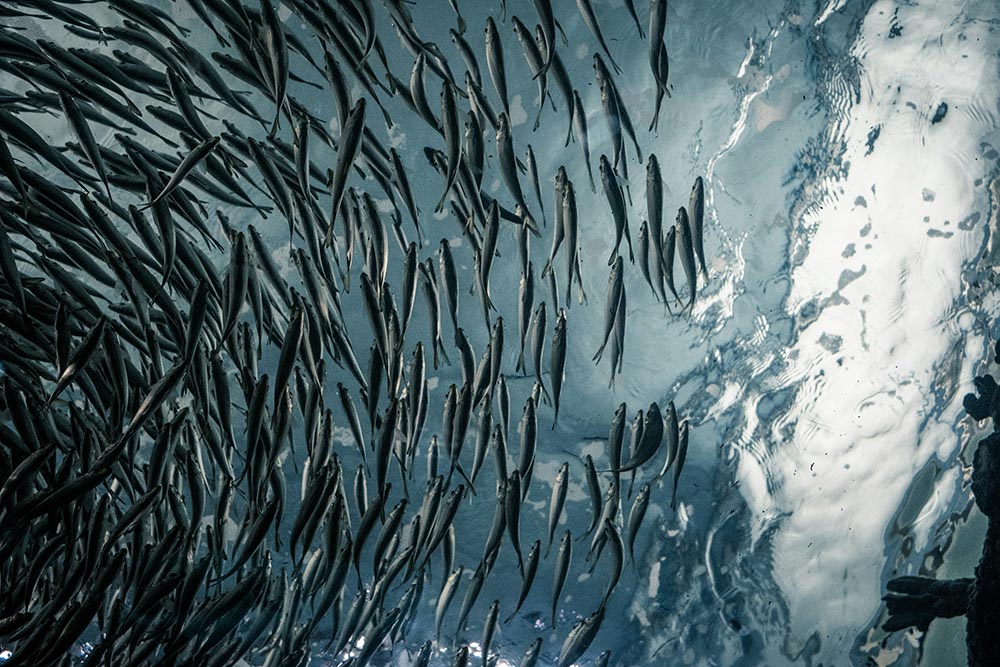
How could we import this philosophy into scientific practice? I believe Haraway would be a proponent of the “One Health” approach, a transdisciplinary perspective that animal, human, and environmental health are interdependent [14]. The One Health approach generates important research questions about the impact of MNPs [15]. For example, little is known about the effect of the most common agricultural practices on the concentration of MNPs in soil, the eventual desertification of which would compromise the food security of humans and animals. Addressing these problems involves specialists from different scientific disciplines, from medicine to agronomy and veterinary medicine.
Then, according to the One Health approach, dealing with human health involves also dealing with the health of the environment and animals and vice versa. Prosperity, then, is such only if it is multi-species.
Generate kinship with microplastics
A famous slogan of Haraway’s is “Make kin, not babies!” [16]. For Haraway, kinships are not just genealogical ties, but ties of care.
Inspired by Haraway, I propose to generate kinship through microplastics. The microplastic bond would replace the blood bond, generating assemblages of species united by a collective effort to care for each other. The One Health approach can be understood as the glue of this effort: only through caring for other species, united in misfortune by the microplastic bond, can we be truly healthy.
Dear sardines, dear mangroves, I present to you my microplastics. You present yours to me and we will thrive together.
References
[1] Ramsperger, A. F. R. M., Bergamaschi, E., Panizzolo, M., Fenoglio, I., Barbero, F., Peters, R., Undas, A., Purker, S., Giese, B., Lalyer, C. R., Tamargo, A., Moreno-Arribas, M. V., Grossart, H.-P., Kühnel, D., Dietrich, J., Paulsen, F., Afanou, A. K., Zienolddiny-Narui, S., Eriksen Hammer, S., … Laforsch, C. (2023). Nano- and microplastics: A comprehensive review on their exposure routes, translocation, and fate in humans. NanoImpact, 29, 100441. https://doi.org/10.1016/j.impact.2022.100441
[2] OECD (2022), Global Plastics Outlook: Policy Scenarios to 2060, OECD Publishing, Paris. https://doi.org/10.1787/aa1edf33-en.
[3] SAPEA, “A scientific perspective on microplastics in nature and society” (2019), pp. 24-25; https://doi.org/10.26356/microplastics.
[4] Ramsperger et al., op. cit., §3.
[5] Ivi, §5.
[6] Ibidem.
[7] Dietary and inhalation exposure to nano- and microplastic particles and potential implications for human health. Geneva: World Health Organization; 2022.
[8] Microplastics are everywhere—We need to understand how they affect human health. (2024). Nature Medicine, 30(4), 913–913. https://doi.org/10.1038/s41591-024-02968-x.
[9] Marfella, R., Prattichizzo, F., Sardu, C., Fulgenzi, G., Graciotti, L., Spadoni, T., D’Onofrio, N., Scisciola, L., La Grotta, R., Frigé, C., Pellegrini, V., Municinò, M., Siniscalchi, M., Spinetti, F., Vigliotti, G., Vecchione, C., Carrizzo, A., Accarino, G., Squillante, A., … Paolisso, G. (2024). Microplastics and Nanoplastics in Atheromas and Cardiovascular Events. New England Journal of Medicine, 390(10), 900–910. https://doi.org/10.1056/NEJMoa2309822.
[10] Digka, N., Tsangaris, C., Torre, M., Anastasopoulou, A., & Zeri, C. (2018). Microplastics in mussels and fish from the Northern Ionian Sea. Marine Pollution Bulletin, 135, 30–40. https://doi.org/10.1016/j.marpolbul.2018.06.063.
[11] Huang, Y., Zhu, Z., Li, T., Li, M., Cai, Z., Wang, X., Gong, H., & Yan, M. (2024). Mangrove plants are promising bioindicator of coastal atmospheric microplastics pollution. Journal of Hazardous Materials, 465, 133473. https://doi.org/10.1016/j.jhazmat.2024.133473.
[12] Haraway, D. J. (2016). Staying with the trouble: Making kin in the Chthulucene, tr. it. Chthulucene: Sopravvivere su un pianeta infetto (C. Durastanti & C. Ciccioni, Trad.). Nero.
[13] Ivi, cap. 2.
[14] Cfr. anche Rock, M. J. (2017). Who or what is ‘the public’ in critical public health? Reflections on posthumanism and anthropological engagements with One Health. Critical Public Health, 27(3), 314–324. https://doi.org/10.1080/09581596.2017.1288287
[15] Prata, J. C., Da Costa, J. P., Lopes, I., Andrady, A. L., Duarte, A. C., & Rocha-Santos, T. (2021). A One Health perspective of the impacts of microplastics on animal, human and environmental health. Science of The Total Environment, 777, 146094. https://doi.org/10.1016/j.scitotenv.2021.146094.
[16] Haraway, op. cit., cap. 4
He holds a Master’s degree in Logic and Philosophy of Science (LMU – Munich), during which he worked on the relationship between science and society. He currently studies Data Analysis (UniTo) and writes about philosophy, science and values online
More articles