The proceeds from selling in these markets, however, are so derisory that in many cases they are not profitable at all. Therefore, many products are not even harvested because they are considered waste. This increases food waste, an issue on which more education would be needed: we have also discussed it here.
A problem made worse by climate change
Climate variations contribute to imperfections in fruits and vegetables: uneven coloring, smaller than expected size, and bruising due to rainfall. Therefore, due to droughts, frosts, heavy rains and invasive species, “unusual” – when not explicitly called “ugly” – fruits and vegetables are on the rise.
The association Terra! has published a provocatively titled report in which it denounces the unsustainability of regulations and the obsession of large retailers with the aesthetics of produce. “Siamo alla frutta!“ aims to draw attention to the issues related to regulations, which prevent some products deemed qualitatively inadequate from reaching supermarkets, with major consequences for agriculture in our country.
For example, oranges harvested in drought-stricken Sicilian territories between 2020 and 2021 were small and had imperfections. To counter the low availability of “beautiful” Italian oranges, many supermarkets preferred to import them from Spain.
How the large-scale retail trade works
The large-scale retail trade is regulated in Europe by regulations that are primarily related to consumer health. It therefore requires that fruits and vegetables be whole, healthy, clean and free of pests. EU Regulation 543/2011, later amended by 428/2019, provides a rather stringent selection, dividing products into “Extra”, “Category I”, and “Category II”. Only “Extra” and “Category I” fruits and vegetables, which meet requirements regarding skin coloring or a specific standard size, can be found on supermarket shelves.
However, this selection risks turning into a vicious circle: consumers, who are used to seeing perfect fruits and vegetables, will be less enticed to buy imperfect foods – but not less good because of this – that risk being wasted. Is it possible to re-educate customers to a different aesthetic? Babaco Market answers yes.
Babaco Market: an… ugly vegetable box!
Babaco Market, also known simply as Babaco, is an Italian company that has come up with an alternative distribution model that values imperfect fruits and vegetables. They sell boxes of two sizes, small and large, which are delivered directly to your home through a flexible subscription formula, which allows you to activate or suspend your subscription at no extra cost.
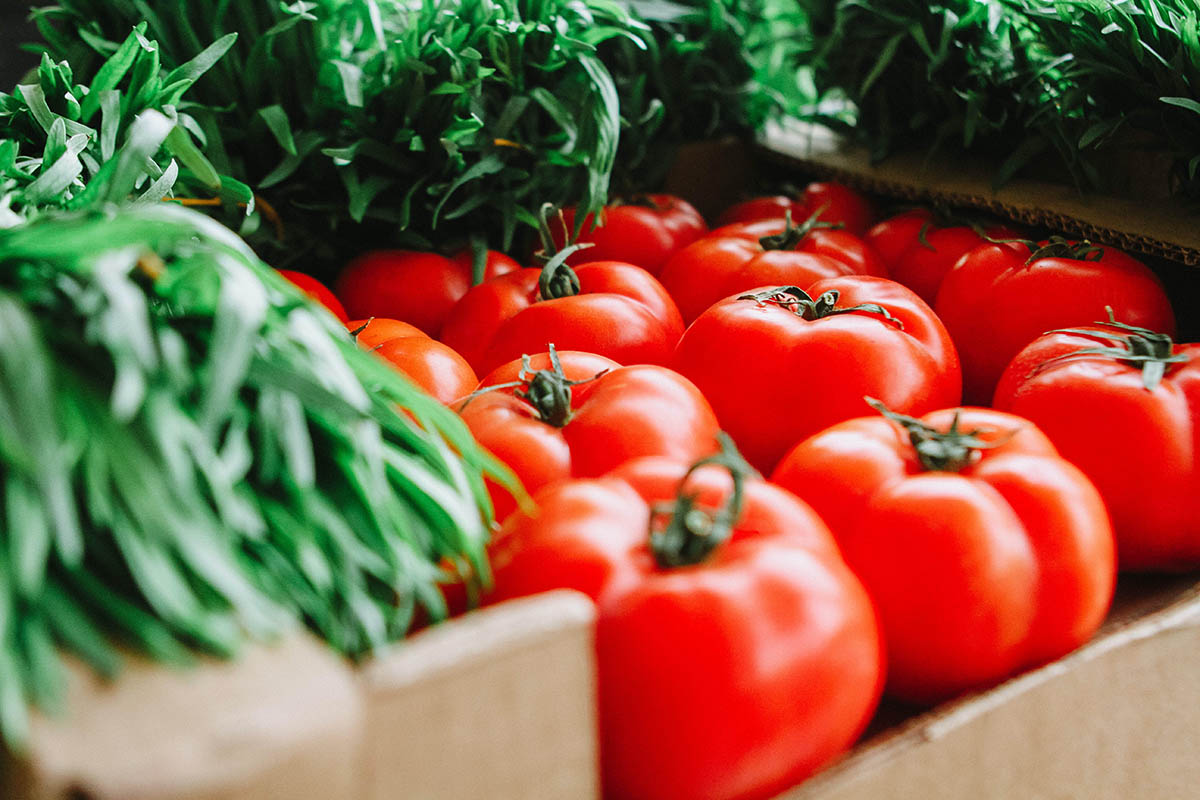
But what does this box contain? Somewhat oddly shaped fruits and vegetables, sometimes close to the expiration date, sometimes excess products. These are seasonal products, from producers selected according to sustainability criteria. It is not possible to choose their contents: the selection of fruits and vegetables is done according to seasonality and crop needs. In addition, Babaco does not use plastic packaging (also very common in supermarkets) and prefers to protect more delicate produce with paper bags, cardboard trays, and biodegradable plastic (PLA, an acronym that stands for polylactic acid).

Pros and cons of home subscription
Babaco’s box arrives directly to one’s home on the days selected as available – a great convenience for the consumer! But from an environmental point of view? Buying online does indeed involve considerable travel by different means, often powered by fossil fuels. Babaco Market writes that part of the deliveries are made with electric vans, “with the ambition to rely on an all-electric fleet in the future”. To date, the delivery service is active in Emilia-Romagna, Lazio, Liguria, Lombardia, Piemonte, Toscana, and Veneto.
The advantage of the subscription formula lies not only in flexibility for the buyer, but is an integral part of Babaco’s anti-waste policy. In fact, in this way the company is able to know in advance the quantity of products to be purchased and prepared. As a result, waste is further reduced even during the selection phase.
The valorization of labor and the zero waste mission
This delivery service was created to combat food waste, a serious problem in the food supply chain compounded by the fact that throwing away a product also means wasting the resources used to produce it. Babaco is committed to giving value to all products, even those with a few dents, to enhance the work of producers.
Moreover, according to their website, nothing goes to waste: any Babaco Boxes left in stock are in fact donated to the Croce Rossa in Opera, to support people in need. Babaco’s anti-waste philosophy seems to be a real challenge to the system currently in place in supermarkets. As they report on their website: “We decided to abandon the standard of beauty and follow that of uniqueness”. A nice motto that expresses Babaco’s philosophy well.

Literature graduated (UniMi), she is currently studying Environmental Humanities (UniVe). Hungry for stories, she loves writing about the environment and being provoked by people’s ideas. Determined and thorough, she likes to go beyond the apparent superficiality of facts. Her safe place is the library, but don’t be fooled: she is never punctual in returning books.
More articles