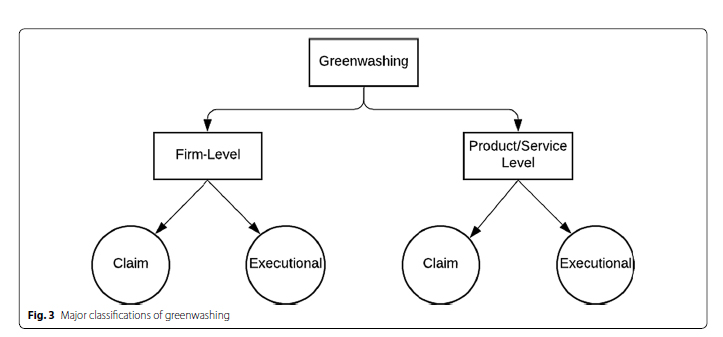
Chart 1: Taken from SV de Freitas Netto et al. (2020, p.7)
How to identify instances of greenwashing
In addition to the theoretical debate on greenwashing, several scholars have developed practical tools to identify this practice in corporate communications. The best known of these is the framework “The sins of greenwashing”, developed in 2007 by the TerraChoice Group, a Canadian firm specialising in environmental marketing. This framework is broken down into seven “sins,” or criteria, that allow one to assess whether a product or company is being guilty of greenwashing through its claims:
- The “sin of the hidden trade-off” [Sin of the hidden trade-off] occurs when information is selected that emphasises the environmental friendliness of a product while ignoring other significant environmental aspects, such as greenhouse gas emissions or the use of chlorine in paper bleaching.
- The “sin of no proof” [Sin of no proof] refers to the lack of evidence or certifications that support a company’s environmental claims. For example, the presence of percentages without linkage to verifiable data.
- “Sin of ambiguity” [Sin of vagueness] occurs when environmental claims are too general and do not provide specific information about the sustainable practices adopted.
- The “sin of worshipping false labels” [Sin of worshipping false labels] occurs when a product suggests that it has been certified by using images similar to those of truly certified products, without having actually received valid certification.
- The “sin of irrelevance” [sin of irrelevance] refers to environmental claims that, although true, are not significant in the context of the product’s overall impact on the environment.
- The “sin of the better of two evils” [Sin of lesser of two evils] occurs when a product or company has an ecologically beneficial aspect within its category while ignoring the overall environmental impact of that category.
- The “sin of fibbing” [Sin of fibbing] occurs when environmental claims are simply false, such as claiming to have a certification that was not obtained or to have reduced emissions when in fact they have increased.
In 2022, an international team of researchers from universities in the United States, Italy, the United Kingdom, and Austria developed an updated and detailed framework for identifying cases of greenwashing. This tool, grounded in the latest scientific research in the field, was designed with the goal of stimulating a more in-depth discussion of corporate transparency and accountability, educating the public about the pitfalls of misleading communication, and assisting the various stakeholders in avoiding greenwashing. [4]
The framework consists of a series of questions that examine the impact, consistency and communication of a company or product, taking into consideration several factors, including the presence of political conflicts of interest. Through a series of binary-answer questions, a qualitative assessment of the type and severity of greenwashing adopted by the company is obtained. This tool is freely available at this link.
A shared responsibility
Greenwashing represents an increasingly urgent challenge for our society. As research continues to study the different facets of this phenomenon, it is important to adopt useful tools to identify instances of it, such as the 7 Sins of Greenwashing list and the 2022 Integrated Framework.
Learning to recognize greenwashing is essential to addressing this issue. As consumers, we can use these tools to make more informed choices in purchasing and avoid being deceived. As active citizens, we can report the most egregious cases of greenwashing to raise public awareness of the problem. Moreover, if we can identify greenwashing, we can also avoid it ourselves. Avoiding the propagation of greenwashing is everyone’s responsibility, but especially journalists and communications experts working for companies.
References
[1] Li, S., & Kallas, Z. (2021). Meta-analysis of consumers’ willingness to pay for sustainable food products. Appetite, 163, 105239.
[2] Baum, L. M. (2012). It’s not easy being green… or is it? A content analysis of environmental claims in magazine advertisements from the United States and United Kingdom. Environmental Communication: A Journal of Nature and Culture, 6(4), 423-440.
[3] SV de Freitas Netto, S. V., Sobral, M. F. F., Ribeiro, A. R. B., & Soares, G. R. D. L. (2020). Concepts and forms of greenwashing: A systematic review. Environmental Sciences Europe, 32, 1-12.
[4] Nemes, N., Scanlan, S. J., Smith, P., Smith, T., Aronczyk, M., Hill, S., … & Stabinsky, D. (2022). An integrated framework to assess greenwashing. Sustainability, 14(8), 4431.

After graduating with a Master’s degree in Philosophy from the University of Padua, he attended a Master’s degree in Science Communication at the University of Trento. He currently works as a science communicator for foundations and research centres in Italy. He collaborates as a writer for Atmosphera Lab.
More articles