How does volcanic activity cool the Earth?
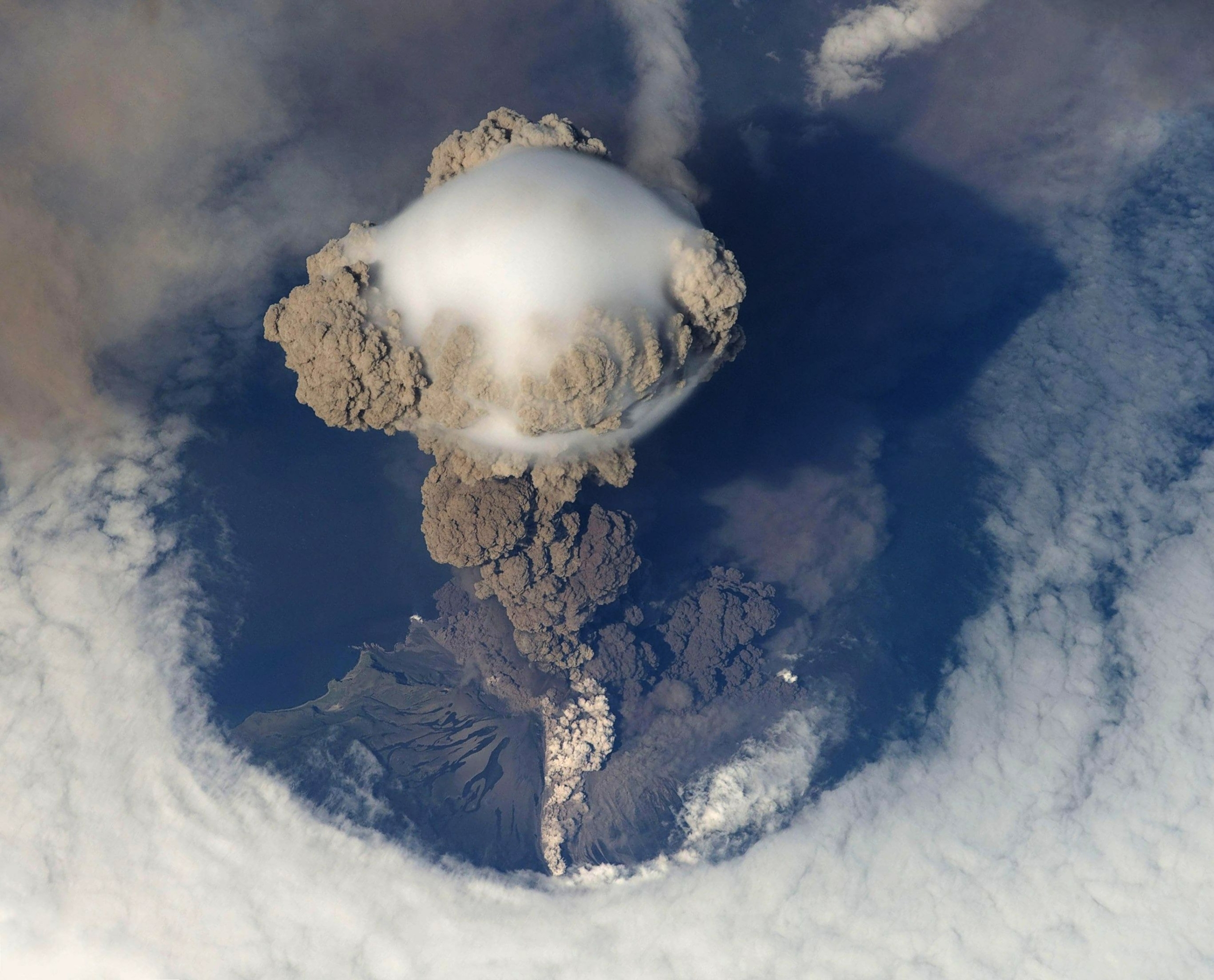
These huge “fire pans” emit millions of particles of sulphur dioxide that are launched more than 20-30 km into the atmosphere (stratosphere) where it forms other particles (sulfuric acid) that can impact the global climate. These particles or aerosols are in fact able to reflect solar radiation, like a huge mirror, decreasing the energy budget received by the Earth and causing global cooling. In the European region, where we have more information about past climate, we have repeatedly seen years without summers, probably caused by the coverage of the skies by particles emitted by volcanoes.
The project funded by Bill Gates
Is this Bill Gates’ project? Recreate a volcanic eruption? Or install a huge mirror in our skies that can obscure the Sun and fight global warming? Although there is a partial truth in there, the reality is quite different, and some clarity and contextualization are needed. Indeed, the American philanthropist and business tycoon has funded the SCoPEX project of Harvard’s Keutsch group, which aims to improve the reliability of computer models of solar geoengineering by providing experimental results that are critical to answering certain scientific questions.
In other words, SCoPEX is a science experiment that aims to collect data on the behaviour of aerosols in the atmosphere in order to power climate models that can show a more complete and accurate picture of our potential solutions to global warming. Recently, the project has attracted the attention of many observers and misleading news outlets following a proposed research program by the U.S. National Academy of Sciences. Because of the continuing increase in greenhouse gas emissions and the difficulties of many countries in meeting the targets stipulated in the Paris Agreement, the U.S. governing body simply proposed possible research to examine this concept, including its potential harms, but did not state its support for solar engineering strategies.
What is the SCoPEX project about?
It is thus well established that the project funded by the Microsoft co-founder is not a solar geoengineering test, but a scientific experiment with more than 40 years of work behind it, linked to the names of scientists such as Frank Keutsch and David Keith. The heart of the experiment is a balloon with an instrument kit at its base that will be deployed into the stratosphere where it will release a small amount of material (calcium carbonate and sulphates) to create a homogeneous volume of air about a kilometre long and 100 metres in diameter. The same instrument kit will measure changes within the perturbed air mass including changes in aerosol density, atmospheric chemistry, and solar ray deflection.

The background of the SCoPEX project
The Bill Gates-funded project is part of the techniques of solar geoengineering, one of the two categories into which geoengineering is conventionally divided (the other is climate geoengineering), which involves the release of substances capable of deviating incoming solar radiation and others capable of increasing the amount of outgoing radiation emitted by the Earth by contributing to lowering temperatures. Although the field has recently received increasing interest, exacerbated by the spread of fake news online, the scientific community, with exceptions of course, is adamantly opposed to the use of these strategies as the main tool for solving the climate crisis. Climate models routinely show that solar geoengineering can have positive results only if used sparingly and in combination with significant cuts in CO2 emissions. So, to believe that projects of this kind can have a major impact on the climate crisis per se is misleading and erroneous.
As Rhea Suh, president of the U.S. Natural Resources Defense Council, affirmed, “geoengineering research is prudent but cannot replace coal emission cuts”. To this, the National Research Council committee added that it would be “irrational and irresponsible” to inject aerosols into the atmosphere without pursuing emissions mitigation or CO2 sequestration. Unlike the latter, solar geoengineering does not require cutting-edge technology, but it has as yet under-investigated effects on climate and the environment. Specifically, the materials of choice would be sulphates, whose effect has been most studied because they are present naturally in the atmosphere, and calcium carbonate, a mineral powder that we find every day in table salt or on our faucets, which has ideal properties, namely, it reflects much more sunlight than it absorbs, unlike sulphates, but it does not exist naturally in our skies, so the actual reactivity of this substance in the stratosphere is essentially unknown.
In addition, both materials react differently with ozone, a key greenhouse gas for UV absorption. Although there are significant uncertainties about the effects of the released materials, it is important to note that we are talking about minimal amounts (2 kg of calcium carbonate) compared to the daily release of other materials into the stratosphere by aircraft, rockets, or balloons. As for sulphates, the amount released would be less than that emitted in one minute by a typical commercial aircraft.
Pros and cons
Solar geoengineering strategies are still a controversial topic and are under consideration by many institutions, including the European Union. In theory, climate models show that solar-ray-deviation strategies would have global benefits by reducing some climate impacts such as temperature extremes, water scarcity, and the intensity of tropical storms. According to AMEG, the deployment of solar geoengineering technologies would be essential to “re-freeze” the Arctic ice caps and prevent the total collapse of the system. However, altering the sun’s rays would temporarily hide the effect of greenhouse gases by reducing temperatures for a few years, as in the case of volcanoes. On the other hand, some say that geoengineering would be unnecessary (as well as risky) because deflecting incoming solar rays from the outside would have no mitigation impact on the greenhouse effect, which instead produces warming from within.
In any case, sunlight deflection strategies will have legal, ethical, social, political, and economic ramifications. There are huge uncertainties about local impacts, particularly about altering precipitation patterns resulting in worsening air quality in some tropical regions (such as the African Sahel), which could form environmental conditions conducive to the spread of malaria, thus bringing greater risks to the most vulnerable areas of Earth. In addition, the lower amount of solar energy received by plants could have unpredictable effects on crops and be the cause of new geopolitical tensions. Although deflecting incoming solar rays would decrease ocean surface temperatures as well as sea level rise, such a strategy would in no way counteract ocean acidification, which is caused by excess carbon dioxide in the atmosphere, with devastating effects on any organic marine life. Finally, experts warn that in the absence of CO2 reduction, we could develop a growing dependence on solar geoengineering activities that will have to be sustained ad infinitum at ever-increasing scales, at the same time slowing down research in “green” technologies, such as wind and solar, and disincentivizing the adaptation of our lifestyles to the climate crisis.
When will the SCoPEX project be implemented?
The answer to the question remains unknown. Even the proposal to carry out a launch test (without the release of any material) in Sweden in June 2021 has been suspended due to the lack of equitable social involvement, particularly following pressure from leaders of the indigenous Saami group who wrote a persuasive letter to the Swedish Space Agency stating that such experiments are “completely against what we need right now – to become a zero-carbon emissions society in harmony with nature”. After this setback, the SCoPEX project seems to have lost interest from the scientific community even though Harvard researchers led by David Keith continue to insist on the need for scientific data collection in order to have more insight into the actual possibility of deploying solar geoengineering strategies.
Last June, the Biden administration promoted a research agenda in a report that, as mentioned above, does not advocate initiating any kind of engineering project but emphasises the right rationale for a cohesive research agenda on the topic to “enable us to make more informed decisions about the potential risks and benefits of solar geoengineering as a component of climate policy”. Understandably, the uncertainties associated with the risks of these projects – called “known unknowns” by the White House – as well as their ineffectiveness against decarbonization are the main obstacles to the development of these technologies.

A graduate in Chinese Studies (Unibg and Unimc), he is currently pursuing a degree in Environmental Humanities at Ca’ Foscari University. He is a teacher of Italian in a public school in Beijing. He believes in the importance of environmental justice.
More articles