Atmospheralab.com
  • EcoMagazine
  • About Us
  • Contacts
  • Italiano
  • Menu Menu
  • Link to Instagram
  • Link to Facebook
  • Link to X
  • Link to LinkedIn
  • Link to Youtube
You are here: Home1 / The revolution of Good on You2 / Fashion3 / The revolution of Good on You

    The revolution of Good on You

    Fashion industry adopts ethical rating

    18/09/2024

    How to dress in a way that respects the Planet?

    A growing number of people are increasingly turning to sustainable lifestyle choices. People are paying attention to water consumption, avoiding food waste, choosing to travel by bicycle or public transportation rather than by car. But how to behave when it comes to selecting clothing that does not negatively impact the environment?

    To our aid comes the digital world, which is structuring itself in such a way as to offer us the tools we need to untangle the ocean called climate change, thanks to apps that sell used products (see Vinted) and those that allow a true bartering of clothes without cost implications (think Declout). 

    A somewhat recent innovation that is increasingly appealing to the public, however, comes from Good on you, an app created with the intention of offering an ethical assessment of brands on a global scale in order to direct the purchasing choices of all those conscious consumers.

    What is Good on you?

    Launched in 2015, Good on you takes its cue from the Rana Plaza disaster on April 24, 2013: the nine-story building housing six factories collapsed, resulting in the deaths of more than 1,000 people and some 2,500 injured.

    The catastrophe stirred the common consciousness and led to a deep reflection on the conditions of workers in the textile industry.  Digital Marketing & PR Manager Solene Rauturier and co-founder Gordon Renouf ii realised that they could no longer be silent witnesses to such exploitation, and they engineered to come up with a solution that would engage buyers from around the world. Hence the app proposal.

    In an interview with l’Officiel Italia in 2021, they summarise the goal to be achieved this way, “Good On You was launched in 2015 with the desire to help shoppers make sustainable choices in the easiest way possible. We started Good On You because we know that more and more people want to make sure their fashion choices do good rather than treating workers unfairly and causing harm to the environment and animals. We collect up to 500 data points per brand on more than 100 key sustainability issues, indicators, and standards systems, including Fair Trade, Cradle to Cradle, OEKO-TEX STeP, and the Global Organic Textile Standard. Where available, we include relevant data from third-party sources such as the Fashion Transparency Index and the CDP Climate Change and Water Security projects”.

    The focus then starts with a heartfelt regard for the conditions of workers and then delves into the complicated terrain of the all-around fashion world, aiming to advocate for animal welfare in the production and sale stages of textile products and to raise awareness among customers about it.

    How Good on You orients the consumer

    From a somewhat intricate design, the fruition of the app is, in fact, simple and intuitive. 

    Once the app is downloaded, one simply types in the item of clothing or, even better, the name of the brand of interest and it will appear punctually rated according to the three pivotal parameters (people, animals and planet) returning to us the final verdict in the form of a scale ranging from 0 to 5 points, where the first equals “We avoid it” while the second means “Excellent”.

    Who, and more importantly, how did they arrive at such a verdict? 

    The premise is the preparation of the people involved: in fact, 12 minds with disparate skills are involved in the work, from scientific analysts to developers to content creators, collaborating from all over the world in the name of sustainability in fashion.

    Usually brands are reported by users, but it happens more often than expected that fashion companies themselves contact them and ask them to be “judged”.
    Which brands failed the test?

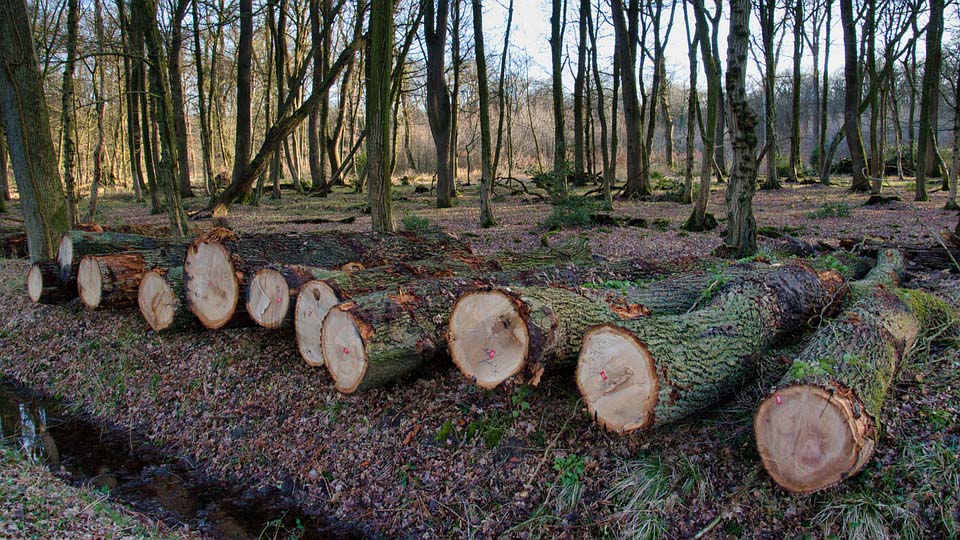
    A year-long investigation has uncovered some skeletons hidden in the closets of brands that are proponents of fast fashion. We are talking about well-known names such as Zara and H&M. Both companies were in fact found to be complicit in the deforestation process in Brazil, particularly in the Cerrado area, an ecoregion rich in flora and fauna: in the time period from 2014 to 2023, tons of cotton were taken from here bound for Asia, where they would be processed and, then, sold later in England, Europe and the United States. 

    In addition to the shame of exploiting workers in the area, the two brands have created enough environmental damage to destroy thousands of hectares of South American farmland.

    The Brazilian government is taking action about the underlying injustices in the clothing production chain however, part of the responsibility stems from our awareness of our purchases, as Good on you is keen to point out in a post on Instagram specifically dedicated to this sad but real reconstruction of events.

    • Share on Facebook
    • Share on X
    • Share on WhatsApp
    • Share on LinkedIn
    • Link to Instagram
    • Link to Youtube
    Sofia Martino

    Graduated in Journalism, Editorial Culture and Multimedia Communication from the University of Parma, she loves interfacing with new realities. An aspiring traveller, she has a keen eye for ecology and human rights. In Atmosphera Lab she has found a valuable ally to communicate what is closest to her heart.

    More articles
    Active(ist) Participation
    • Society

    Active(ist) Participation

    14/02/2025
    The Greenhouse Gas Challenge
    • Society

    The Greenhouse Gas Challenge

    14/02/2025
    Plastic on the beach: waste or find?
    • Society

    Plastic on the beach: waste or find?

    14/02/2025
    A lagoon-colored soccer jersey: the partnership between Ocean Space and Venezia FC
    • Art

    A lagoon-colored soccer jersey: the partnership between Ocean Space and Venezia FC

    14/02/2025
    The danger of eco-fascism
    • Society

    The danger of eco-fascism

    23/09/2024
    Grycle, a technology for a world without waste
    • Science and environment

    Grycle, a technology for a world without waste

    18/09/2024

    Pages

    • About Us
    • Atmosphera lab
    • Contacts
    • EcoMagazine

    Categories

    • Agriculture
    • Animals
    • Architecture and design
    • Art
    • Daily activities
    • Economy
    • Energy
    • Fashion
    • Food and cooking
    • Mobility and Tourism
    • No category
    • Science and environment
    • Society

    Archive

    • February 2025
    • September 2024
    • July 2024
    • May 2024
    • April 2024
    • February 2024
    • December 2021
    • November 2021
    • October 2021
    • August 2021
    • July 2021
    • June 2021
    • May 2021
    • April 2021
    • March 2021
    • February 2021
    • January 2021
    • December 2020
    • November 2020
    • October 2020
    • September 2020

    INFO

    • About Us
    • Contacts
    • Privacy Policy
    • Sitemap

    RECENT POSTS

    • Active(ist) Participation
    • The Greenhouse Gas Challenge
    • Plastic on the beach: waste or find?

    CONTACTS

    atmospheralab@gmail.com

    © Copyright 2020 - Atmosphera lab - Developed by Matteo Bazzani
    • Link to Instagram
    • Link to Facebook
    • Link to X
    • Link to LinkedIn
    • Link to Youtube
    • About Us
    • Contacts
    • Privacy Policy
    • Sitemap
    Scroll to top Scroll to top Scroll to top