A vegetable garden – online
There are not many people that haven’t tried, or at least heard of, those online games where it is possible to create a virtual farm, with veggies, animals and so on. Maybe someone unaware could think that MyAgry is exactly that. “Bring the countryside to your home”, says a large writing on top of the homepage, and right underneath: “create your vegetable garden” or “create your olive garden”. If this hypothetical person had clicked on that link, they would have discovered that, once they selected a number of crops – mostly veggies – and placed them on a square surface, they would be asked for money.
This is because MyAgry does not create virtual farms or vegetable gardens: those selected crops are really going to be planted, in real orchards, by expert farmers, who are mostly into traditional and organic farming. The aim is to supply those who live in urban areas with healthy and seasonal products and plan cultivation with the consumer, who is informed of every step and can thus has an “inside view” of the farmer’s work. In other words, the line that in traditional supply chains clearly divides producer and consumed, is blurred.
New technologies for old ideas
This idea is actually not completely new: in the 1960s Japan saw widespread scandals of food contamination. Many people were permanently damaged after eating products that came from large retailers. It was hard to understand their origin and there were very few quality controls in place. Therefore, they started to directly contact small local farmers, often organic, looking for quality foodcoming from a relationship mainly built on reciprocal trust. This was called Teikei, “cooperation” in Japanese.
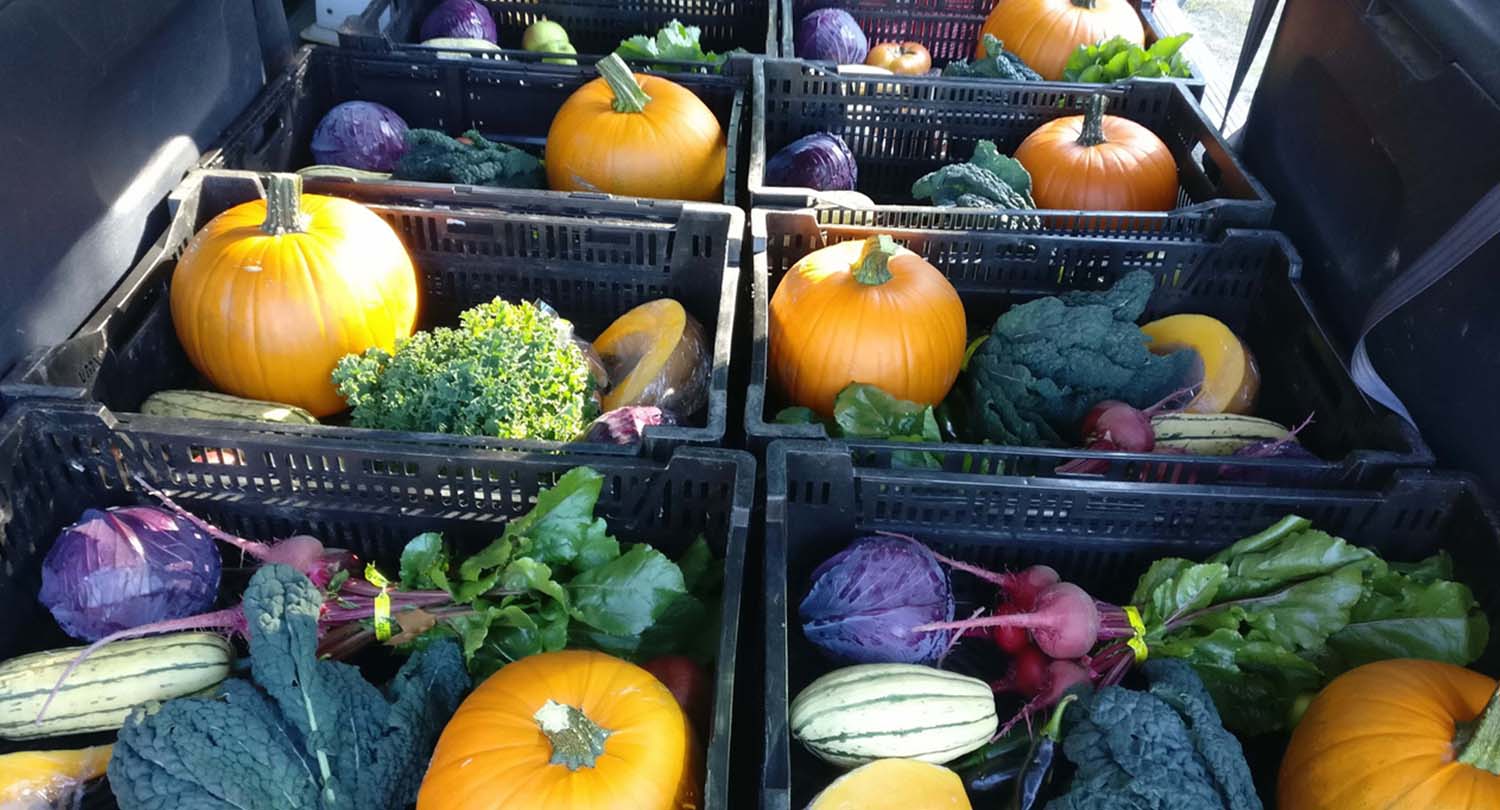
This renewed wantand need to see and experience firsthand the origin of the food that we puton our tables daily also found its way to other countries.
In Switzerland, in 1978, a group of citizens and one farmer started to cooperate, managing a few vegetable gardens together. Les jardins de Cocagne was thus born, and it is still thrivingtoday. It is not only about buying directly from the producer:citizens take on an active role in production. Planning is done together and the cultivation is collaborative.
Today, Community Supported Agriculture, also known as CSA, has spread to all continents. The movement inspired by these principles can count on many associations, both at the national level – like Solawi in Germany, CAFF in the USA or CSA Brasil – and at the international level, like Urgenci.
And what about Italy?
In Italy, this model has faced some hardships. Sure, the GAS (Gruppi Acquisto Solidale – Groups for Solidal Purchasing) can be deemed an initiative with many affinities to CSA. Yet, participation of the citizens in production is completely absent, both in terms of planning and in terms of field work.
There are, however, a few examples that have achieved some success, like Arvaia in Bologna or Semi di Comunità (Seeds of Community) in Rome. A research from 2021 highlights how the model of CSA as done in Italy fulfills all criteria of sustainability necessary to future agriculture. However, the level of participation and financial sustainability can be very different. This problem is worsened by the total lack of a legislative framework for this kind of activity. Other critical points that are often mentioned are inclusion, meaning the economical unsustainability of participation for many families, and difficulties in reaching out to new people.
In this regard, MyAgry could facilitate the diffusion of a different production model, erasing the need to be close to the place where the CSA is. The question remains, if this is effective in educating citizens about the need of a different agriculture, since there is no direct contact with the farmer and the farm. It is in any case an initiative that goes in the right direction, that of changing consumption patterns and empowering citizens.

Altri articoli